
An Evolving Crisis - Cultural Awareness: Covid-19
Over the coming weeks Pyramid Temi Group will be publishing a series of updates from our regional hubs. The objective is to deliver informed comment and insight from our experts as to how a series of countries are addressing the Covid-19 (Coronavirus) emergency.
To launch the series we’ve asked Pyramid Temi Group CEO Roger Warwick to comment on why there is a difference to each country’s response to the emergency.
If you would like future updates delivered directly to your email box please sign-up to the option by clicking here.
Please note that in addition to the Covid-19 updates, those who sign-up to the service will receive a complimentary copy of our updated country report.
Cultural Awareness: What can the international response to the Covid-19 (Coronavirus) pandemic teach us about local cultures?
When advising on Travel Security issues we place significant emphasis on the importance of cultural awareness, the current Covid-19 pandemic has led a great number of nations to impose a series of measures and restrictions on their citizens and, to be effective, these measures have to take the local realities into consideration.

We asked Roger Warwick, CEO of the Pyramid Temi Group, to comment on these considerations and what lessons can be learned from Italy, China, South Korea, and the United Kingdom’s responses to the current emergency.
PTG: Would you agree that no single solution suits all and thus individual governments must devise their own specific strategies?
RW: This is exactly the case, we have seen how the Chinese response appears to have been highly efficient because the social structure responds to commands from above and news is efficiently filtered. Aside from the student revolt in 1989 which culminated in the Tiananmen Square incident, modern China has no history of social revolt and Chinese citizens know that they cannot rebel against orders as they will be severely punished. For example the door-to-door checks and enforced quarantine in government structures as recently seen in China cannot be done in democratic nations.
PTG: Is it correct to say that a government’s response has to be based on the local reality and that in particular cultural concerns must be taken into consideration?
RW: We do need to study the local realities and they can only be understood by taking some historical facts and moments into consideration. Let me make a quite radical example that illustrates the point. During the Second World War the British Government chose to focus investments on building anti-aircraft batteries around London as opposed to creating air-raid shelters for the local population. In 1939 Prime Minister Neville Chamberlain’s military advisors expected aerial bombardments to be far greater than they actually turned out to be, the decision was thus made to ‘sacrifice’ a part of the population in favour of focusing investments on aerial defence measures. In a certain fashion, the current UK Government appears to be reasoning with a similar mentality in an attempt to protect the nation at the expense of the weaker members of the community - this has a certain logic but it would most certainly not be accepted in a country with a strong Catholic culture.
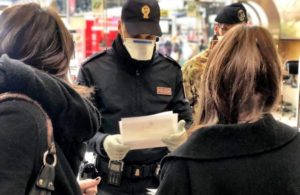 PTG: Which factors define Italy’s response to the current emergency and how do they differ from China and the UK’s?
RW: It’s easy for us to criticise the mistakes that have been made but we should consider that, apart from this being unchartered territory for all, and I mean all, Italy is governed by two parties that ran as opponents in the elections, each with its own agenda and they are up against a strong and vociferous opposition. The Italian Government attempted to bring in measures that, they hoped, would achieve something without upsetting too many, as have other governments around the world. No need to cite examples. They should, in my opinion, have created a “National Unity” emergency government that included the opposition. If you keep your adversary close and involve them in decision making, you will have less noisy opposition to every decision made and you will be able to enact unpopular decisions without the opposition leaders screaming.
The error was in not taking the gloves off and considering this to be a war right from the start.
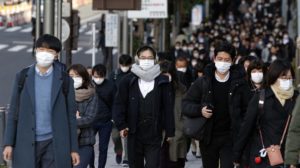 China is a totalitarian state with all the strengths and weaknesses that this implies i.e. blind obedience but the risk of collapse if you lose control. This has made it essential and possible for the rulers to implement measures that would be impossible in democracies. On the other hand, the rulers have far more to lose if they are not successful. The flaw in the system was the fact that local rulers tried to cover up and resolve the problem in-house in order to avoid being punished by central government. This would have been less likely and possibly impossible to do in a democracy. In short, the Chinese lost a month but then moved in with artillery. It is interesting to note that Xi Jing disappeared from the radar screen until the tide started to turn.
 The UK has a government that is focused on one thing only, BREXIT. Boris Johnson hoped that the Covid-19 matter would blow over so he could get back to business. It hasn’t, so now something, a lot, has to be done. He is making off-the-cuff comments, such as “We will see results within 12 weeks” and is giving voice to some of the comments made by the scientific community such as The Herd process before having sufficiently examined the concept. Unlike Italy, the UK has a weak and divided opposition looking for a new leader. This gives further powers, de facto, to the government without the risks run by totalitarian rulers if things should go wrong.
PTG: What are the most critical concerns that these governments have had to take into consideration, what worries them most in terms of the public’s response?
RW: I’ve approached this in answering the previous question. In short Italy; how to achieve steel fisted results without taking off their gloves. China; how to maintain absolute power if the measures taken don’t work. UK; the Government doesn’t appear to be that worried about public response. They are overestimating their power and popularity.
PTG: At this point in time are there any foreseeable risks of social unrest and if so how will the local authorities react?
RW: If the Italian Government is intelligent enough to bring on board the opposition they can blame Europe for everything and there will be no violent social unrest. They are talking about a new Marshall Plan but have not taken into account that Italy is no longer the first and last line of defence against the Soviet Union, something Bettino Craxi underestimated after the fall of the Berlin Wall, but that’s another story, so there won’t be an airlift and blank cheques.
China. It looks like the Chinese rulers are weathering the storm well so if no surprises this could just mean a hierarchy reshuffle, and restructuring, then back to business as usual.
As regards the UK this is a big question mark. Over the past 70 years and more the British have relied on the myth of being invincible but things have changed. If the government organises itself properly and achieves results there will be no social unrest. The country will bind together and continue. If, on the other hand, the emergency response is a complete disaster then spontaneous, non-party-led, movements could spring up and be violent.
As said before, this is very much unchartered territory.
PTG: When we emerge from the current emergency what changes will we find, are there any particular social issues, such as delusion over leadership’s actions, that might cause problems in the future?
RW: Scientific advice and political agendas are strange bedfellows at the best of times. In Italy we’ve seen some pretty bad examples of science and politics being at loggerheads. Will this change? Will people rise up against their deluding politicians? I would imagine that this will be down to the number of dead and the number of starving, homeless, and out of work survivors.


Business Continuity - Coronavirus
Business Continuity during the Coronavirus pandemic. Andy Williams sets out key principles for business continuity planning. Read the article in Italian at https://www.travelforbusiness.it/2020/02/24/business-travel-continuity
English version below:
Covid-19 (Coronavirus), has now reached Italy and is anticipated to spread across Europe. Despite the fact that pneumonia kills thousands each year, the unknown nature and apparent exoticness of the new virus is creating public panic.
The public are also employees of companies and when people fear for their health one of two things happen – either companies come second and they stay at home or they look for companies for help and advice.
As the virus spreads more and longer employees start to become anxious about their job as well as their own and their family’s health.
This is where the importance of business continuity planning comes into play for all sizes of companies in all sectors, especially labour intensive business and business that rely on travel and face to face meetings.
The old saying, "those who fail to plan are those who plan to fail" is never more true than now. If you do not have a pandemic business continuity plan already in place, now is the time to start.
Here are some priority points to consider and help decide what is business critical and a priority to get your company a through a short, medium or long term coronavirus pandemic escalation.
• Information: Ensure your management teams are provided with factually correct and consistent information and advice on the virus from an accredited medical organisation or government agency: not social media or the general news media. Bad news and information increases panic and spreads, correct news and information reassures and calms. Prepare FAQ’s for employees and links to information services as described.
• Well-being and support: Be proactive in providing accredited advice on preventative hygiene and recognising symptoms relating to the virus for all employees. Include regular updates and allocate a team to respond to enquiries from employees in both written and verbal format.
• Supply Chain: Forecast both your personnel and product supply chain for worst case business disruption and best-case business resumption in the short, medium and long term. List out what is business critical and minimum to the business without cutting too deeply into the bone that you are unable to walk and run quickly again when business returns to normal.
• IT Infrastructure and Cyber Security: if the solution is to redeploy employees to work from home and remotely. Ensure the IT infrastructure, cloud storage and bandwidth capacity is in place for employees engaged prioritised for remote working business critical functions to do so. Mandate and provide easy instructions on setting up and using VPN’s. Provide refresher training on Cyber and Information security.
• Equipment and Utility Servicing: If you have equipment and utilities due annual servicing or preventative maintenance, do it now while the service is available, especially for air conditioning in anticipation of summer weather if the disruption is medium term.
• Pandemic Essential Supplies: Order handwash disinfectant and other pandemic essential supplies now, before there is a rush on their supply if the situation is looking medium term. You can never have enough handwash disinfectant.
• Scenario Planning: With your management team, conduct scenario planning for worst case impact of pandemic in short, medium and long term. Ensure scenario plans take into account all these points and any others specific to your business to keep it running, treading water or surviving in contingency mode until business is back to normal.
Readiness for Recovery: When business is back to normal, those who travel first will be welcomed the most.

COVID-19 - Evacuation
COVID-19. International Assistance: Read the comment by our partner PACE First HERE
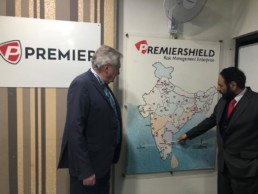
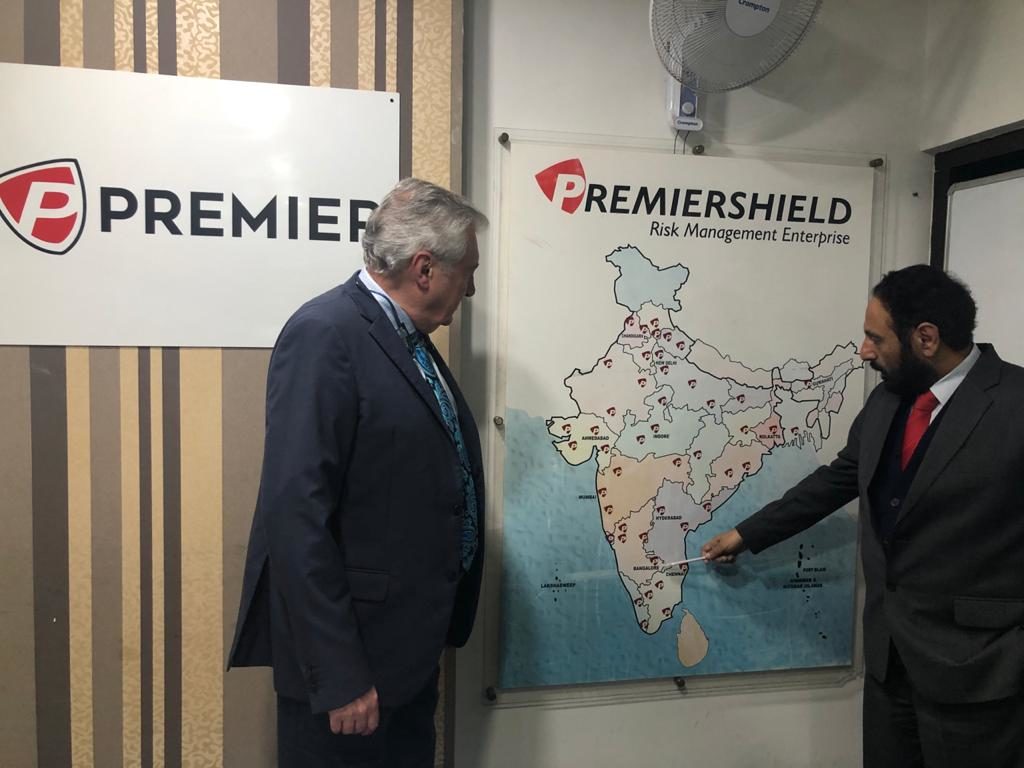
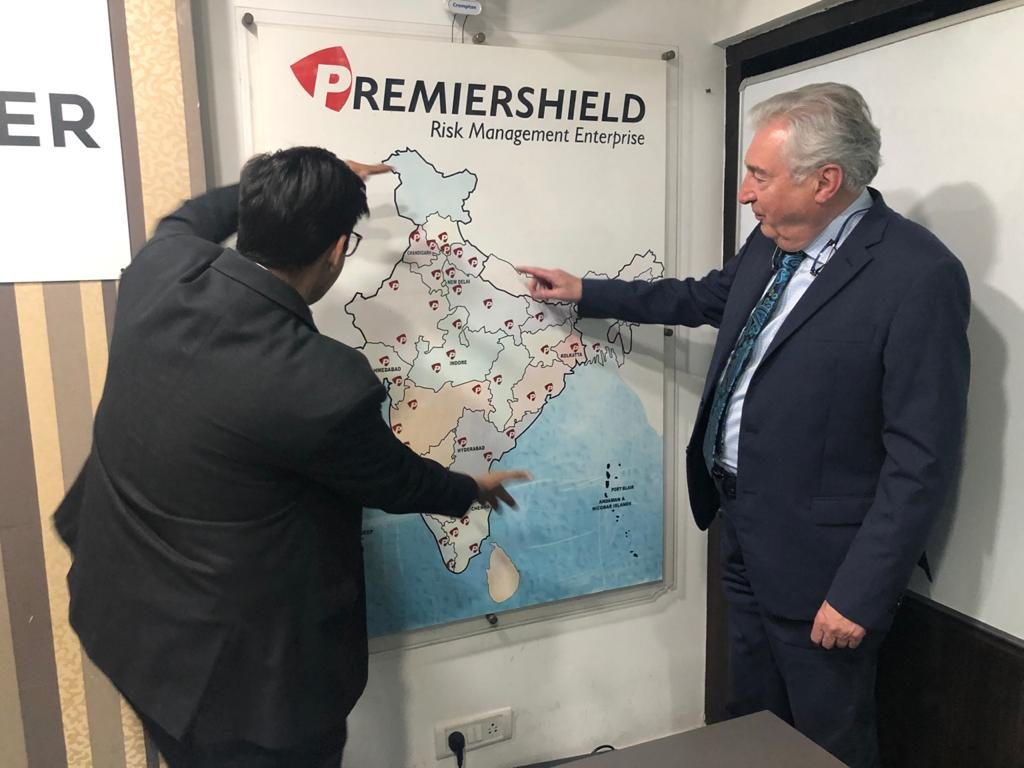
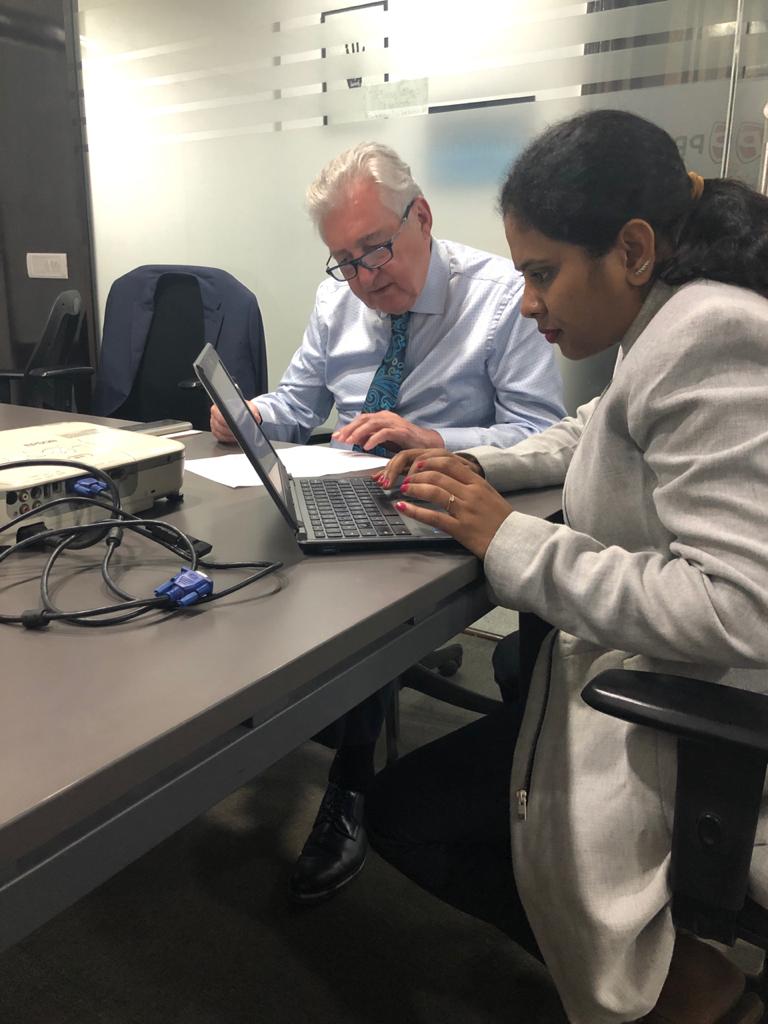
Pyramid Temi Group CEO Roger Warwick recently visited our India Hub
Pyramid Temi Group CEO Roger Warwick recently visited our India Hub. Consolidating our presence in India and improving business strategies to deliver top quality security services to our clients.
In these pictures our CEO with Pawanjit and Jasjit Ahluwalia, Managing Directors and Owners of Premier Shield, Senior Partner Temi Group International.
Pyramid Temi Group (PTG) recertified ANSI/ASIS PSC.1
ANSI/ASIS PSC.1 is a management standard for the quality of private security company operations in difficult environments.
PTG has been successfully recertified, by DQS Holding GMBH, to the latest version of ANSI/ASIS PSC.1:2012, rev 2017. PTG is the only italian company to be certified.
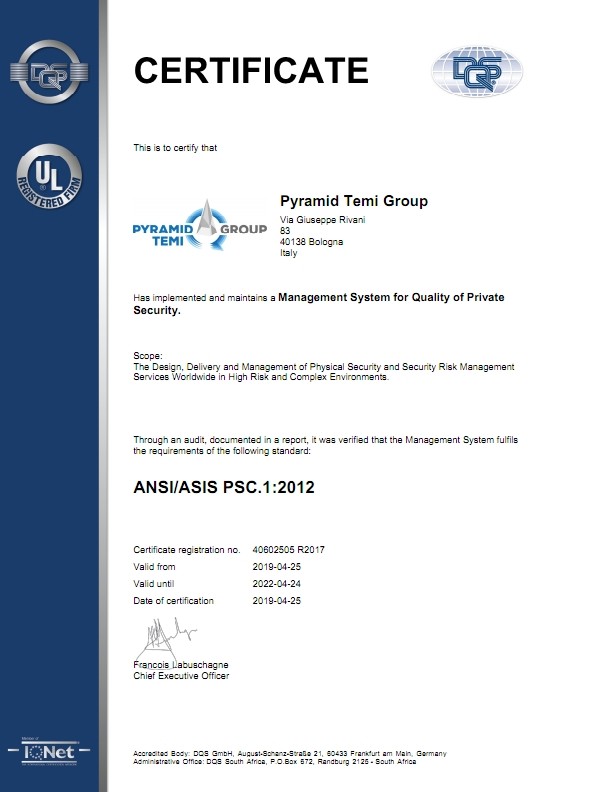
PSC.1 is a guarantee of competence, experience and reliability, as well as professional ethics and legality
 Certification to PSC.1 demonstrates operating in compliance with the Montreux Document and to ICoCA – International Code of Conduct Association, a multi-stakeholder initiative established as a Swiss non-profit association, recognised by the UN. ICoCA promotes the responsible provision of private security services, with respect for human rights and legal obligations.
ANSI/ASIS PSC.1 is one of the four documents published in the ANSI/ASIS series that apply to Private Security Companies. The PSC.1 Standard has been converted into a full international Standard, ISO 18788.

Pyramid Temi Group launches Advisory Board
Pyramid Temi Group (PTG) announces, with pleasure, the launching of an Advisory Board composed of three eminent security professionals.
PTG Advisory Board members:
- Mark Lowe, long term Risk Analyst for the private sector and former Intelligence and Security consultant for the Italian Ministry of Defence
- Lynn De Vries, director of DutchRisk BV, Dutch security organisation, with many years’ experience in Africa, and trainer at CPP and Security Management courses.
- Damiano Toselli, senior security advisor who has held important positions such as Head of Corporate Security of Telecom Italia and Carabinieri Commanding Officer in Lebanon
Their individual support over the years has played an active role in our success. Their combined skills and experience will play a fundamental role in consolidating our international position.
For more info on our Advisory Board members read HERE
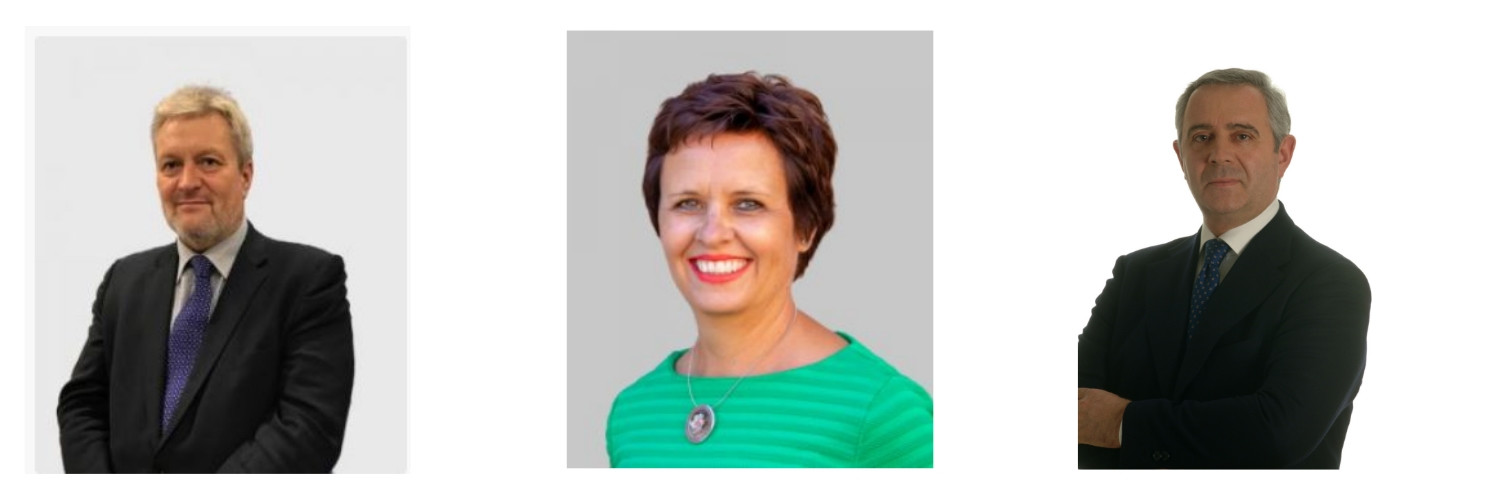
Mark Lowe, Lynn De Vries, Damiano Toselli